Home

SMART FIRES Year 2 Highlights 2025 - Special Edition Newsletter

This special edition provides an overview of the SMART FIRES project’s second-year achievements, highlighting its interdisciplinary research on prescribed fire using sensors, AI, and community engagement. It showcases progress across it's four research thrusts, welcomes new team members, and recognizes early-career researchers. Broader impacts include a summer educator workshop at MSU and STEM outreach at the Powwow.

View Special Edition

Team News

View All News
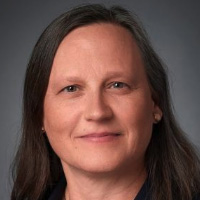
Jazzelle Elias profile photo

Women in STEM feature: Jazzelle Elias

Where are you from? I was born in Southern California near Los Angeles and lived there until I was ten. I then moved to a small logging town called Sedro-Woolley in Western Washington where I stayed until I moved to Missoula, Montana, to begin my undergraduate degree. So half of my foundational years were spent in a very urban setting, and the other half in a vastly different environment. Talk about whiplash!

ReadBlog Women in STEM feature: Jazzelle Elias
the Smokevan in Lubrecht Experimental Forest during a prescribed burn

UM Smokevan Progress Report: Updated Insights From a Year of Field Deployments

Inside the University of Montana’s “Smokevan”: A Mobile Lab Transforming Prescribed Fire Smoke Research The Smokevan is deployed during a prescribed burn at Lubrecht Experimental Forest The Smokevan—a mobile air quality lab

ReadBlog UM Smokevan Progress Report: Updated Insights From a Year of Field Deployments
Family Science Day SMART FIRES outreach booth

SMART FIRES Engages Fifth Graders at MSU Family Science Day

Suzi Taylor challenges kids to figure out what triggers each toy sensor while one student watches drone footage of a prescribed burn The SMART FIRES booth drew steady crowds at Montana State University’s Family Science Day on February 5, 2026.

ReadBlog SMART FIRES Engages Fifth Graders at MSU Family Science Day
a teacher shares a photo during unboxing of her kit

K–2 Scientific Sensing Curriculum Distributed to nearly 50 Montana Schools

A teacher from Denton Elementary unboxes the kit in her classroom The long-awaited K–2 Sensing for Science curriculum has now been distributed to Montana schools that requested it following an announcement of availability last November.

ReadBlog K–2 Scientific Sensing Curriculum Distributed to nearly 50 Montana Schools
collage of seed awardees

2025 Seed Awards

The SMART FIRES Research Seed Award Program provides funding to support innovative research projects that align with the goals of the SMART FIRES NSF EPSCoR initiative, which focuses on advancing technologies and understanding around prescribed fire and its impacts on Montana communities. Open to faculty at Montana State University and the University of Montana, the program offers awards of up to $25,000 to fund activities such as equipment purchases, personnel costs, field data collection, and collaborative research.

ReadBlog 2025 Seed Awards
Jazzelle Elias profile photo

Women in STEM feature: Jazzelle Elias

Where are you from? I was born in Southern California near Los Angeles and lived there until I was ten. I then moved to a small logging town called Sedro-Woolley in Western Washington where I stayed until I moved to Missoula, Montana, to begin my undergraduate degree. So half of my foundational years were spent in a very urban setting, and the other half in a vastly different environment. Talk about whiplash!

ReadBlog Women in STEM feature: Jazzelle Elias
the Smokevan in Lubrecht Experimental Forest during a prescribed burn

UM Smokevan Progress Report: Updated Insights From a Year of Field Deployments

Inside the University of Montana’s “Smokevan”: A Mobile Lab Transforming Prescribed Fire Smoke Research The Smokevan is deployed during a prescribed burn at Lubrecht Experimental Forest The Smokevan—a mobile air quality lab

ReadBlog UM Smokevan Progress Report: Updated Insights From a Year of Field Deployments
Family Science Day SMART FIRES outreach booth

SMART FIRES Engages Fifth Graders at MSU Family Science Day

Suzi Taylor challenges kids to figure out what triggers each toy sensor while one student watches drone footage of a prescribed burn The SMART FIRES booth drew steady crowds at Montana State University’s Family Science Day on February 5, 2026.

ReadBlog SMART FIRES Engages Fifth Graders at MSU Family Science Day
a teacher shares a photo during unboxing of her kit

K–2 Scientific Sensing Curriculum Distributed to nearly 50 Montana Schools

A teacher from Denton Elementary unboxes the kit in her classroom The long-awaited K–2 Sensing for Science curriculum has now been distributed to Montana schools that requested it following an announcement of availability last November.

ReadBlog K–2 Scientific Sensing Curriculum Distributed to nearly 50 Montana Schools
collage of seed awardees

2025 Seed Awards

The SMART FIRES Research Seed Award Program provides funding to support innovative research projects that align with the goals of the SMART FIRES NSF EPSCoR initiative, which focuses on advancing technologies and understanding around prescribed fire and its impacts on Montana communities. Open to faculty at Montana State University and the University of Montana, the program offers awards of up to $25,000 to fund activities such as equipment purchases, personnel costs, field data collection, and collaborative research.

ReadBlog 2025 Seed Awards
A graduate student works in the Spectrum Lab at Montana State University on Thursday, Jan. 19, 2023, in Bozeman, Mont. (Colter Peterson/MSU Photo)

$41M award to Montana Tech Hub

A regional technology hub focused on photonics and smart sensors, of which Montana State University is a founding member, will receive a $41 million federal grant to help create tech jobs across Montana.

ReadBlog $41M award to Montana Tech Hub

Montana STEM Summit 2023 findings and next steps will be presented online Dec. 12

Key findings from the 2023 Montana STEM Summit will be shared in an online presentation on Tuesday, Dec.

ReadBlog Montana STEM Summit 2023 findings and next steps will be presented online Dec. 12

Project Highlight: "The Future Isn't Written"

Dr. Arica Crootof of UM Western assists in a project surrounding effective communication about contamination and remediation efforts of the Warm Springs Ponds at the headwaters of the Clark Fork River.

ReadBlog Project Highlight: "The Future Isn't Written"

New article from CREWS JRW Natural Resource Social Science team focuses on challenges rural communities face with public water systems

A recent publication from the Natural Resource Social Science team highlights the challenges facing rural communities in the arena of public water systems—namely, the locally-managed infrastructure that delivers domestic water to homes in settled areas like small towns and cities.

ReadBlog New article from CREWS JRW Natural Resource Social Science team focuses on challenges rural communities face with public water systems
Graduate student Tasha Stryker stands next to a development version of the online Crash Course game

Online college simulation game introduces players to STEM concepts and pathways

The online learning game, Crash Course, is a virtual college simulation that introduces players to various STEM concepts and pathways.

ReadBlog Online college simulation game introduces players to STEM concepts and pathways

In the News

UM is clearing the air in the West

Prescribed fire research project brings MT researchers together

‘Deeply Meaningful’: UM Names First Female Dean of W.A. Franke College of Forestry

Upcoming Events

What We Do

More about us
We develop and manage NSF ESPCoR Research Improvement Investment (RII) Awards to Montana to promote the development of science and technology capacity across the Montana University System. Since 2001, Montana has received $88M in NSF EPSCoR RII Track-1 awards, supporting achievement of R1 status at both Montana State University and University of Montana, with these outcomes:
$240M+
New external grant funding
90+
Faculty hires
370+
Graduate students supported on projects
1.5K+
Undergraduate students supported on projects