
2007-2008 Year 1 Annual Report
June 15, 2008
Table of Contents
Table of Contents
Introduction
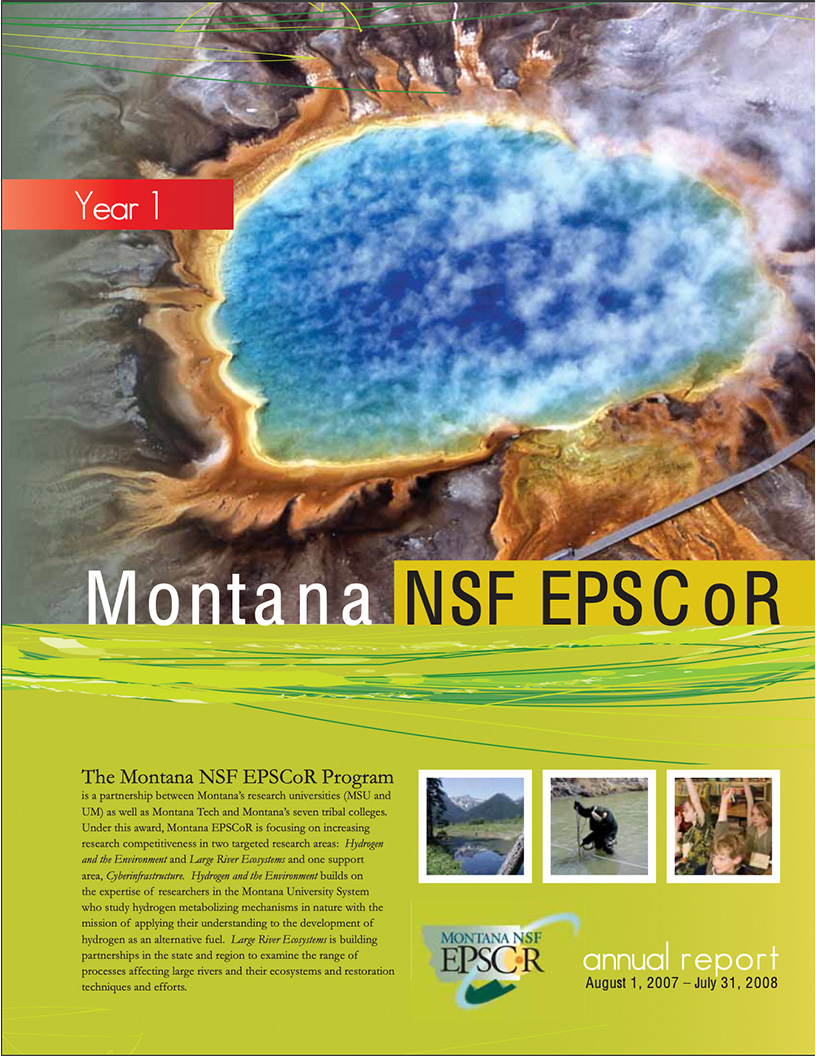
- Montana NSF EPSCoR Year 1 Annual Report (August 1, 2007 – July 31, 2008)
- Overview of research focus areas: Hydrogen and the Environment, Large River Ecosystems, and Cyberinfrastructure
Year 1 Highlights
- Hydrogen and the Environment research collaborations
- Statewide EPSCoR Conference
- Tribal college engagement in river ecosystems research
- spectrUM outreach and award-winning science communication campaign
Scientific Achievements
Hydrogen and the Environment
- Advances in hydrogenase enzyme structure research
- Biomimetic synthesis of titania nanoparticles
- Yellowstone metagenomics and astrobiology projects
Large River Ecosystems
- Establishment of the River Center
- Research to improve river management and restoration practices
Programmatic Achievements
Faculty and Research Capacity Building
- New faculty hires
- Dr. Abigail Richards
- Dr. Wyatt Cross
- Dr. Kevin Wanner
- Approval of the Center for Riverine Science and Stream Renaturalization
Student Support and Workforce Development
- Graduate student stipends
- Undergraduate research awards
- Research training opportunities
Tribal College Partnerships
- Large River Ecosystems subawards and collaborative projects
- Watershed, habitat, and environmental microbiology research
Cyberinfrastructure and Research Facilities
- Office of Research Computing development
- Bioinformatics, microscopy, and analytical laboratory support
Outreach and Community Engagement
- spectrUM Discovery Area
- NASA Astrobiology partnerships
- FIRST Lego League and educational collaborations
Conferences and Meetings Supported
- National and international scientific conferences
- Yellowstone Research Coordination Network Conference
- Montana NSF EPSCoR State Conference
- Tribal college collaboration meetings
Participant Demographics
- Gender and ethnicity of Year 1 participants
Budget and Investment Overview
- Expenditure distribution across research, outreach, student support, cyberinfrastructure, and administration
Research, Education, and Outreach in Action
- Large River Ecosystems field research
- Tribal college student participation
- Graduate student laboratory research
- Water quality monitoring projects
- K–12 science outreach through spectrUM
- NSF site visits and engagement activities
Contact Information
- Montana NSF EPSCoR program offices
- University of Montana and Montana State University contacts