
Infrastructure via Science and Technology Enhanced Partnerships (INSTEP)

Award:
Award #:
Timeframe:
2004-2007
Amount:
$9,000,000
Principal Investigator:
Chuck Thompson (UM)
Project leads
-
Mark Young
(MSU)
Co-PI
The Montana EPSCoR Research Infrastructure Improvement award will build national competitiveness through research infrastructure improvements in four areas. The Center for Biomolecular Structure and Dynamics at the University of Montana(UM) will be established to study the molecular mechanisms for biologically and medically important processes and the molecular rearrangements that accompany these processes. A new Chemical and Biological Engineering Department will be created at Montana State University (MSU) to be the focus for bioengineering research, acting synergistically with existing research groups in bioinspired nanotechnology, thermal biology and biofilms. The multidisciplinary Center for Bioinspired Nanomaterials will be established at MSU and will focus on viral and other protein cage structures for the synthesis of novel nanomaterials with catalytic, magnetic and imaging applications. UM and MSU also will develop a joint Ph.D program in Neuroscience and use the ACCESS Grid Node for intercampus instruction. Fundamental to Montana’s infrastructure improvement is the expansion of interdisciplinary collaborations among Montana institutions and with universities outside the state. Montana Tech and six Tribal Colleges will also participate in collaborative activities with the state universities.
Infrastructure support will include a variety of focused and integrated human development, education and outreach programs. Strong emphasis will be placed on programs to increase the participation of Native Americans in science and education, unique K-12 initiatives, significant support for undergraduate experiences in research, outreach to middle school teachers and their students, a Science Exploratorium to serve rural communities, diversity programs in undergraduate research as well as a partnership with the state Small Business Innovation Research program to advance economic development. These programs endeavor to broaden education and human resources capacity and expand the involvement of the broader university community in S&T issues.
Newsletters & Reports
-
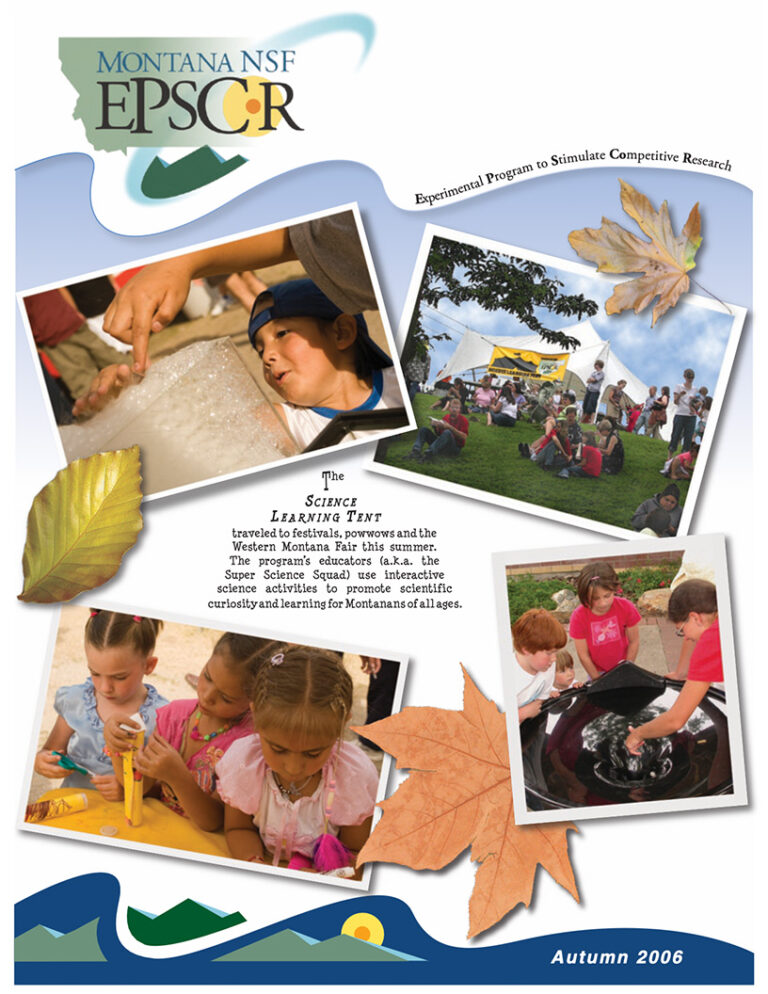
2006 Fall
September 22, 2006
-
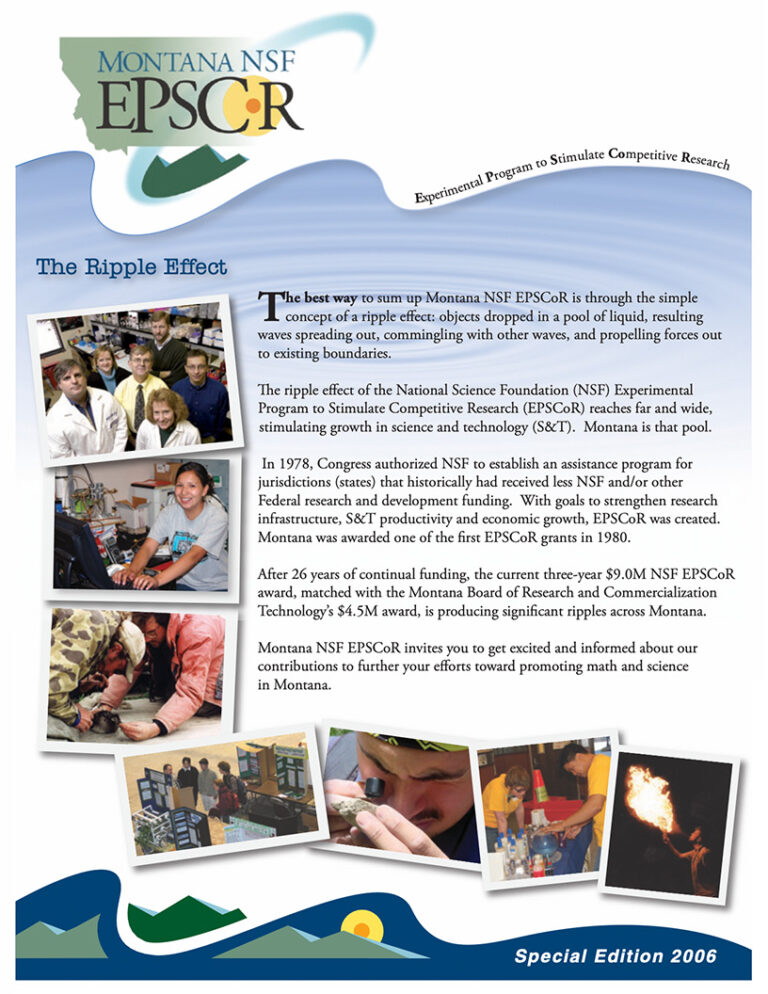
2006 Special Edition
August 22, 2006
-
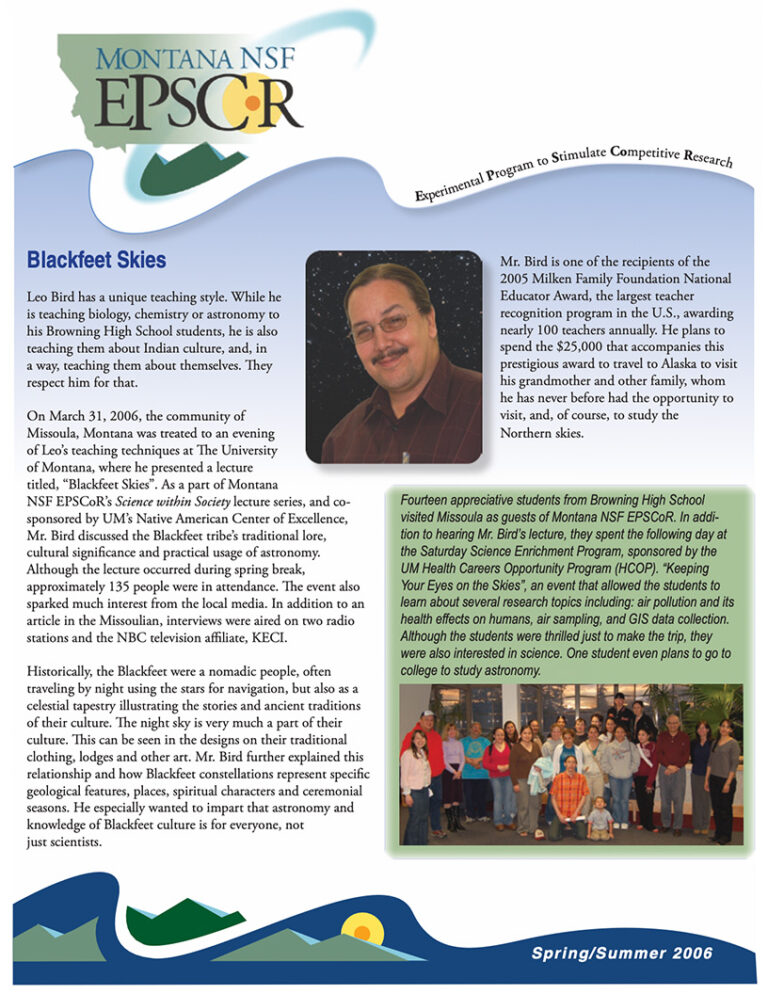
2006 Spring
March 20, 2006
-
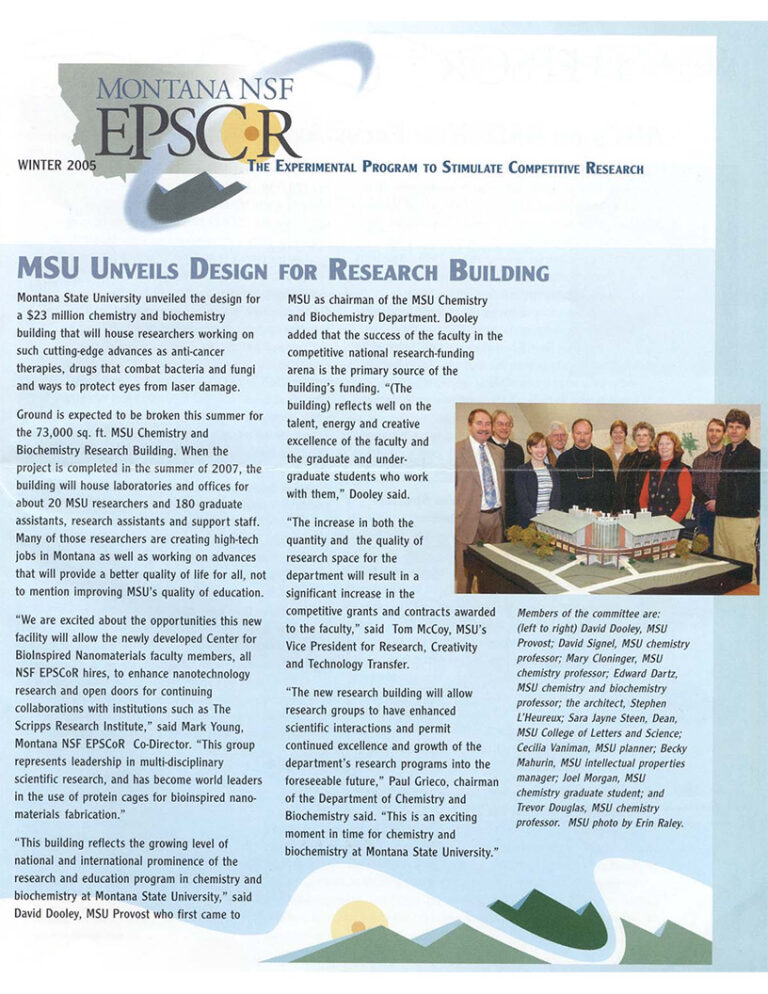
2005 Winter
December 15, 2005
-
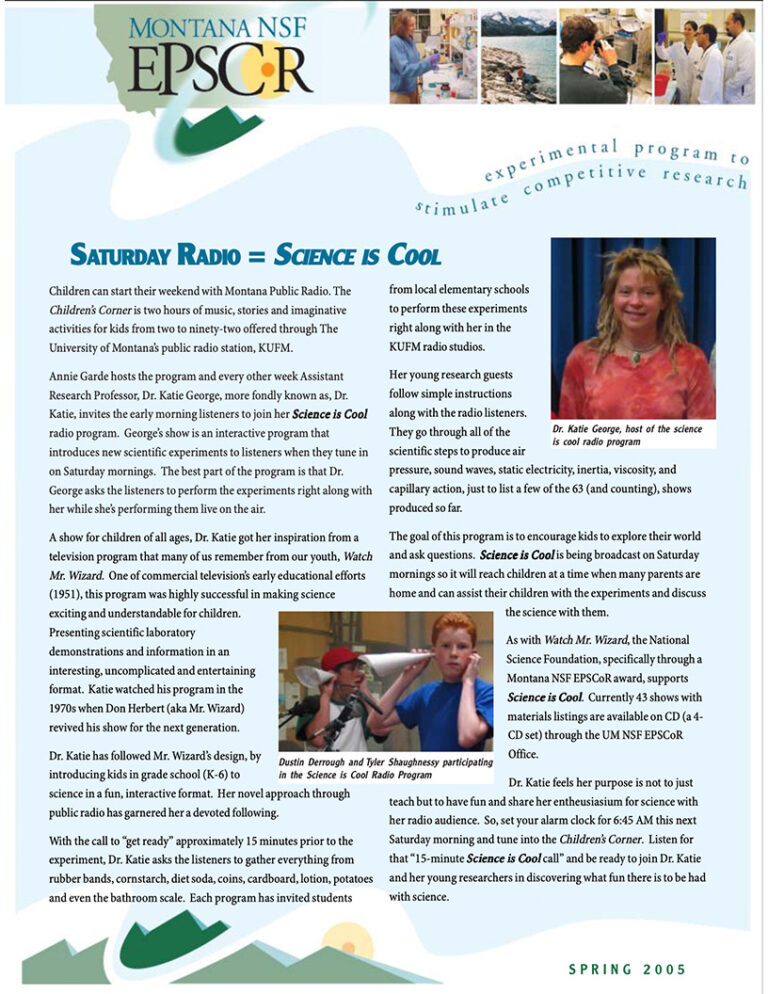
2005 Spring
March 22, 2005
-
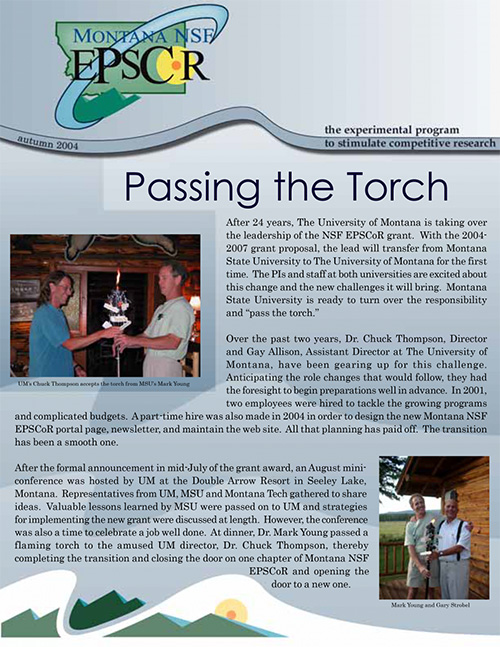
2004 Fall
September 20, 2004